
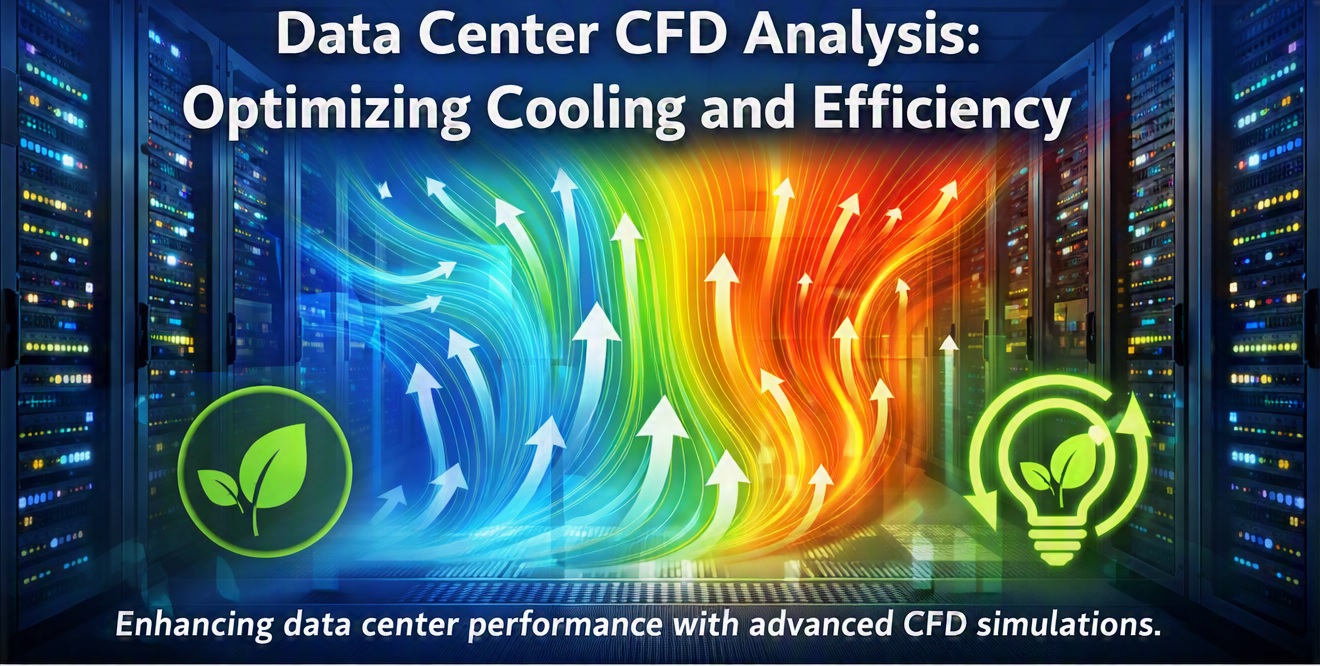
CFD Analysis of Data Centers: Optimizing Cooling, Efficiency, and Reliability
Introduction
Modern Data Centers are the backbone of our digital economy, powering cloud services, AI applications, and enterprise IT infrastructure. As demand grows, so does the challenge of managing heat loads, airflow, and energy efficiency. This is where CFD (Computational Fluid Dynamics) Analysis becomes indispensable.
Why CFD Analysis Matters in Data Centers
- Provides detailed insights into airflow distribution, temperature gradients, and pressure zones.
- Helps identify hot spots, optimize cooling strategies, and reduce PUE (Power Usage Effectiveness).
- Ensures compliance with ASHRAE TC 9.9 standards and avoids costly retrofits.
Key Benefits of CFD in Data Centers
- Energy Efficiency: CFD helps reduce cooling costs by up to 30%.
- Reliability: Prevents overheating of critical IT equipment.
- Sustainability: Supports compliance with LEED and BREEAM certifications.
- Scalability: Models can be adapted for hyperscale facilities or edge data centers.
Applications of CFD in Data Centers
- Airflow Optimization: Ensures balanced cooling across racks.
- Raised Floor & Containment Design: Evaluates hot aisle/cold aisle strategies.
- Thermal Comfort Analysis: Important for staff working in mission-critical environments.
- Fire & Smoke Simulation: Enhances safety compliance.
Case Study Example
A large USA-based Data Center implemented CFD analysis to redesign its cooling layout. Results included:
- 25% reduction in cooling energy consumption.
- Elimination of persistent hot spots in server racks.
- Improved uptime and reduced risk of thermal shutdowns.
Conclusion
CFD Analysis of Data Centers is no longer optional — it is a strategic necessity. By leveraging advanced simulations, organizations can achieve efficiency, sustainability, and reliability in their mission-critical facilities.
0 Comments
Be the first to share your thoughts on this article.
Leave a Comment